Chemical and Molecular Data
| Formats Offered | Lyophilized Dry Powder |
|---|---|
| Peptide Sequence | Tyr-Asn-Trp-Asn-Ser-Phe-Gly-Leu-Arg-Phe-NH2 |
| Synonyms / Alt Names | , Kp-10, Metastin (45-54), KISS1 (112-121), YNWNSFGLRF-NH2 |
| CAS Number | 374675-21-5 |
| Chemical Formula | C63H83N17O14 |
| Molecular Weight | 1302.45 g/mol |
| IUPAC Name | L-tyrosyl-L-asparaginyl-L-tryptophyl-L-asparaginyl-L-seryl-L-phenylalanylglycyl-L-leucyl-L-arginyl-L-phenylalaninamide |
| InChIKey | Protected Peptide Sequence Matrix |
| SMILES Code | Protected Peptide Sequence Matrix |
What is ?
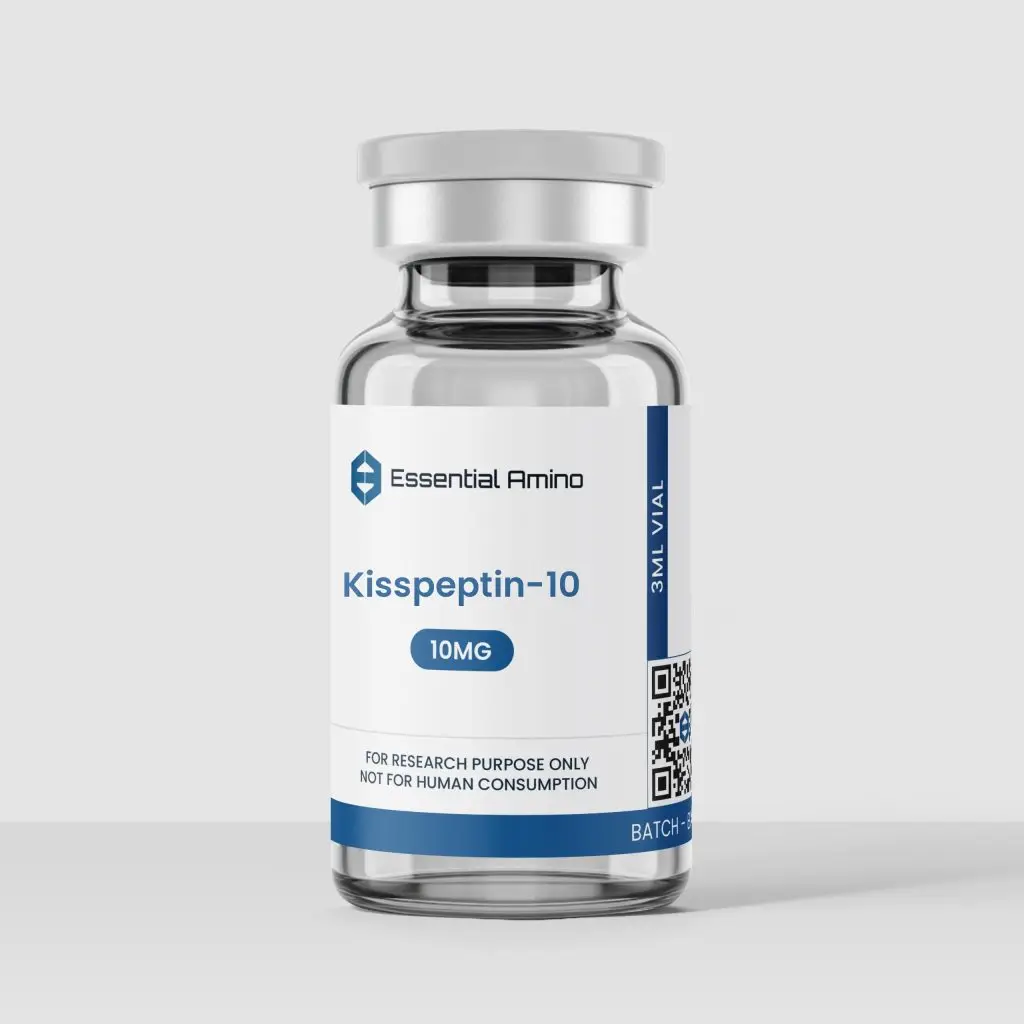
Research Peptide (known chemically as metastin 45-54 or KISS1 112-121 fragment) is the shortest fully functional C-terminal amidated decapeptide fragment of the human KISS1 gene precursor. Comprising 10 amino acids (Tyr-Asn-Trp-Asn-Ser-Phe-Gly-Leu-Arg-Phe-NH2), functions as the primary endogenous ligand for the G-protein coupled receptor KISS1R (formerly known as GPR54).
Positioned at the apex of the neuroendocrine hierarchy, acts as the master upstream regulator of the hypothalamic-pituitary-gonadal (HPG) axis. By binding KISS1R on arcuate and anteroventral periventricular (AVPV) hypothalamic neurons, triggers synchronized, pulsatile secretion of Gonadotropin-Releasing Hormone (GnRH). This upstream pulse drives the downstream synthesis and pituitary release of Luteinizing Hormone (LH) and Follicle-Stimulating Hormone (FSH).
For laboratory and in vitro evaluation, researchers often choose to buy as a standardized 10MG lyophilized reference standard in a sterile glass vial. Reconstituted solutions can be prepared using sterile laboratory buffers or a dedicated reconstitution solution. Researchers evaluating neuroendocrine pulse generators, gonadotropin release dynamics, and metastatic tumor suppression often study alongside complementary research peptides available at Essential Aminos, such as and .
What are the Mechanisms of Action?
The biochemical pathways and cellular targets of Research Peptide in laboratory research include:
- KISS1R (GPR54) Receptor Agonism & Gq/11 Signaling: binds the extracellular domain of KISS1R with sub-nanomolar affinity (Kd ≈ 0.04–0.14 nM). Receptor activation recruits Gαq/11 proteins to stimulate Phospholipase C (PLC), driving hydrolysis of PIP2 into inositol trisphosphate (IP3) and diacylglycerol (DAG).
- Intracellular Calcium Mobilization & MAPK Activation: IP3 binds sarcoplasmic/endoplasmic reticulum receptors to induce rapid intracellular calcium (Ca2+) efflux. Elevated cytosolic Ca2+ and DAG activate Protein Kinase C (PKC) and extracellular signal-regulated kinase (ERK1/2 / MAPK) cascades, regulating neuroendocrine gene expression.
- Hypothalamic GnRH Pulse Generation & Gonadotropin Drive: In hypothalamic slice preparations, depolarizes GnRH neurons, inducing sustained action potential firing. This drives calcium-dependent exocytosis of GnRH into the hypophyseal portal circulation, triggering pituitary gonadotrope secretion of LH and FSH.
What do Preclinical & Academic Studies Show for Research Peptide?
When evaluating research efficacy and published scientific literature for :
- HPG Axis Regulation & LH/FSH Release Kinetics (PubMed): Landmark neuroendocrine studies cataloged on PubMed (PMID: 11606306) confirm that binds KISS1R to stimulate robust, dose-dependent increases in plasma LH and FSH across mammalian models.
- Master Endocrine Control & Metastatic Suppression (PMC): Comprehensive biomedical reviews archived in PMC (PMC3089842) document ’s dual role as an upstream HPG axis driver and a potent inhibitor of cancer cell migration and trophoblast invasion.
- Chemical Profiling & Identification (PubChem): Official structural characterization maintained on PubChem verifies the molecular mass (1302.45 g/mol), C-terminal amide decapeptide sequence, and HPLC mass spectrometry profile of CAS 374675-21-5.
How does the Research Peptide compare to other Research Compounds?
To evaluate neuroendocrine hierarchy, receptor targets, and gonadotropin release mechanics, researchers compare Research Peptide against other well-characterized reproductive endocrine reference compounds:
vs. HCG & HMG (Upstream Brain Control vs. Direct Gonadal Stimulation)
In reproductive endocrinology and cellular signaling research, the site of pathway intervention determines how the overall axis responds:
- (Hypothalamic Apex Regulator): Operates at the central nervous system level by agonizing KISS1R receptors in the brain. Drives natural, pulsatile secretion of endogenous GnRH, which forces the pituitary to produce its own endogenous LH and FSH while maintaining central feedback loops.
- HCG (Human Chorionic Gonadotropin): Operates downstream at the gonadal level as a direct agonist of Leydig cell LH/hCG receptors. Drives robust intratesticular steroidogenesis (testosterone), but lacks FSH activity and causes central GnRH/LH suppression via steroid negative feedback.
- HMG (Human Menopausal Gonadotropin): Operates downstream as an exogenous 1:1 mixture of LH and FSH activity. Directly stimulates both Leydig cells (LH) and Sertoli cells (FSH) at the gonadal level, but bypasses central hypothalamic control and suppresses central drive through feedback loops.
| Compound / Reference | Chemical Class & Structure | Primary Target & Level of Action | Research Focus & Profile |
|---|---|---|---|
| C-Terminal Amidated Decapeptide Fragment | Hypothalamic KISS1R (GPR54) Agonist (Upstream Apex) | Drives native hypothalamic GnRH pulses to release endogenous LH and FSH; preserves central HPG feedback mechanisms | |
| HCG (Human Chorionic Gonadotropin) | Heterodimeric Glycoprotein Hormone | Gonadal LH/hCG Receptor Agonist (Downstream) | Mimics LH activity directly at Leydig/granulosa cells; stimulates intratesticular steroidogenesis without native FSH release |
| HMG (Human Menopausal Gonadotropin) | Purified Glycoprotein Hormone Mixture | Gonadal LH/hCG & FSH Receptors (Downstream) | Directly supplies 1:1 exogenous LH and FSH activity to stimulate Leydig steroidogenesis and Sertoli germ cell maturation |
| Gonadorelin (GnRH) | Endogenous Decapeptide (GnRH Native Sequence) | Pituitary Gonadotrope GnRH Receptor (Mid-Level) | Acts directly at pituitary receptors to trigger acute LH/FSH release; bypasses hypothalamic kisspeptin control |
Frequently Asked Questions (FAQs)
1. Is Essential Aminos a reliable place to buy Research Peptide?
Yes, Essential Aminos is a highly trusted vendor for high-purity research chemicals and reference peptides. Every batch undergoes strict third-party analytical testing (including HPLC and Mass Spectrometry) to verify minimum 98%+ chemical purity, exact decapeptide sequence fidelity, correct molecular weight (1302.45 g/mol), and complete absence of heavy metals or synthesis impurities.
2. What is and how is it derived?
is the active 10-amino-acid C-terminal fragment of the human KISS1 gene product (metastin 45-54). It contains the essential sequence domain (YNWNSFGLRF-NH2) required for high-affinity receptor binding and biological activity.
3. What is the mechanism of action of on the HPG axis?
agonizes KISS1R (GPR54) receptors on hypothalamic neurons, stimulating pulsatile release of Gonadotropin-Releasing Hormone (GnRH). Portal GnRH then acts on pituitary gonadotropes to drive Luteinizing Hormone (LH) and Follicle-Stimulating Hormone (FSH) secretion.
4. What downstream intracellular pathways are activated by KISS1R binding?
KISS1R activation recruits Gq/11 proteins, activating Phospholipase C (PLC) to generate IP3 and DAG. This triggers rapid intracellular calcium (Ca2+) release and activates Protein Kinase C (PKC) and ERK1/2 (MAPK) phosphorylation cascades.
5. How does compare to HCG and HMG in endocrine research?
operates upstream at the hypothalamic level to fire native GnRH pulses, forcing the pituitary to secrete endogenous LH and FSH. HCG acts downstream at the gonadal level to mimic LH only. HMG provides exogenous LH and FSH activity directly to the gonads. Unlike HCG and HMG, preserves central feedback loops.
6. What role does play in cancer metastasis research?
Originally identified as metastin, binds KISS1R to inhibit cell motility, chemotaxis, and focal adhesion dynamics in metastatic cell lines, suppressing tumor invasion in experimental metastasis models.
7. How does Essential Aminos verify the chemical purity and mass identity of Research Peptide?
Essential Aminos utilizes High-Performance Liquid Chromatography (HPLC) to confirm active chemical purity exceeding 98% and Mass Spectrometry (MS) to verify exact molecular weight (1302.45 g/mol) and 10-amino-acid decapeptide sequence identity prior to batch release.
8. What are the recommended storage parameters for lyophilized Research Peptide glass vials?
Lyophilized glass vials should be stored tightly sealed in a cool, dry environment (15°C to 25°C) or refrigerated for long-term preservation. Protect from direct heat, light exposure, and atmospheric moisture to maintain solid-state peptide stability.
Disclaimer: All compounds and research materials provided by Essential Aminos are strictly for laboratory and research professional use only. They are not approved for human or animal use nor consumption by the Food and Drug Administration (FDA). These products should not be used for any form of in vivo experimentation or for any other non-laboratory purpose. Any violation or indication of human or animal use will result in immediate removal from being able to purchase products in the future. By purchasing these products, you acknowledge that they will be used exclusively within a controlled and qualified research environment.
Shipping & Returns
Same-Day Dispatch
Orders before 4 PM CT Mon–Fri ship same day. Weekend and holiday orders ship the next business day.
Carriers
U.S. shipping via FedEx. FedEx 2Day $15, FedEx Priority Overnight $60. Free shipping on U.S. orders over $200. Prices exclude tax.
Returns
Returns and exchanges for damaged or defective products only. Contact us within 14 days of delivery with your order number and photos.
Full details: Shipping Policy and Refund Policy.
Disclaimer: All compounds and research materials provided by Essential Aminos are strictly for laboratory and research professional use only. They are not approved for human or animal use nor consumption by the Food and Drug Administration (FDA). These products should not be used for any form of in vivo experimentation or for any other non-laboratory purpose. Any violation or indication of human or animal use will result in immediate removal from being able to purchase products in the future. By purchasing these products, you acknowledge that they will be used exclusively within a controlled and qualified research environment.
Certificate of Analysis
Certificates of analysis are provided for laboratory research reference. Expand a batch below to view the PDF. Only the newest three COAs for this product are listed here.
10MG - Lot / Batch: BX-P-J1C2
- Mass Identification: Kisspeptin; Confirmed
- Average Net Peptide: 11.97 mg
- Average Purity: 99.55%
- Endotoxin Threshold Results: Pass; assay sensitivity ≤0.05 EU/mL
- Lot#: BX-P-J1C2
- Search Code: Esse2609239143
Search all COAs by batch number (includes older batches not shown above).