Oxytocin
What is Oxytocin?
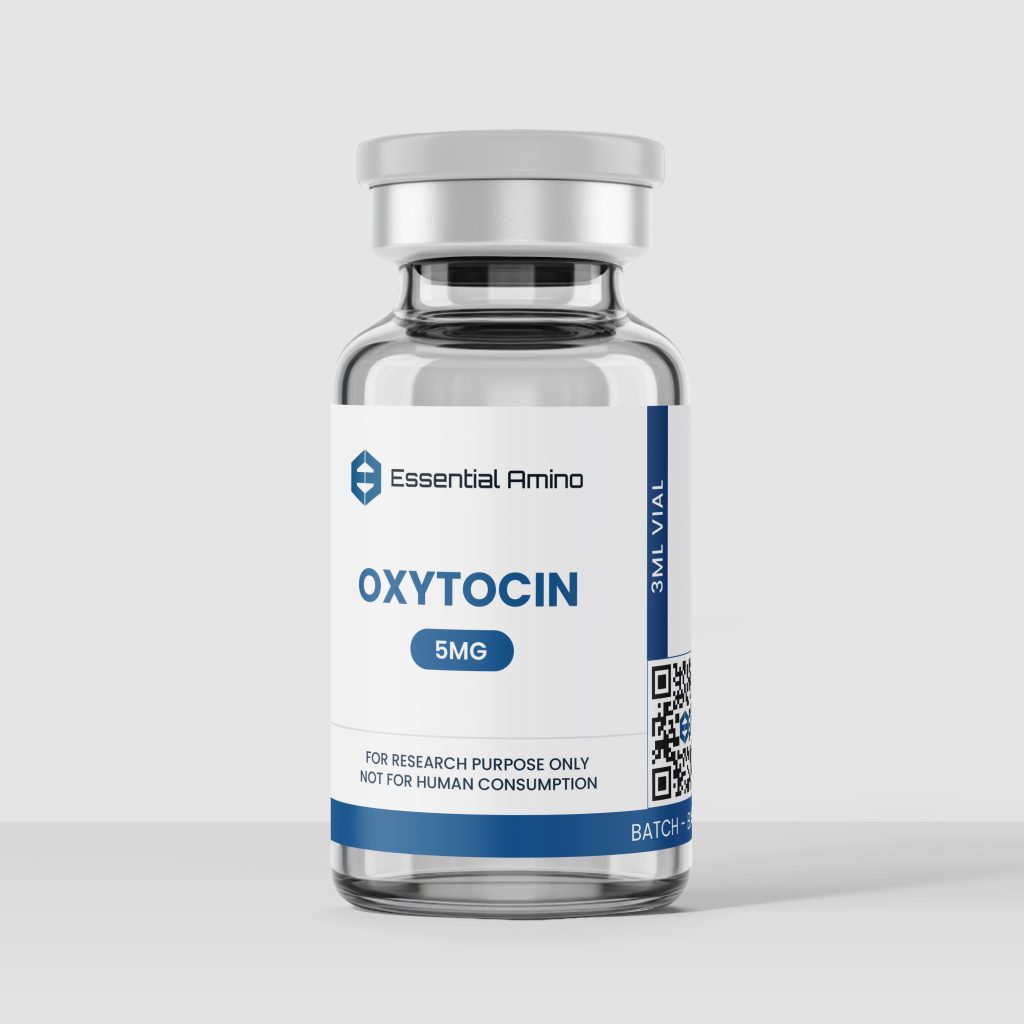
Oxytocin (known chemically as OXT, Pitocin, or Syntocinon) is a naturally occurring, cyclic nonapeptide hormone and neuropeptide synthesized within the paraventricular and supraoptic nuclei of the hypothalamus. Featuring an intramolecular disulfide bond between cysteine residues at positions 1 and 6, Oxytocin is stored and released by the posterior pituitary gland into systemic circulation, while simultaneously acting as a central neurotransmitter across limbic brain structures. Researchers investigate Oxytocin for its fundamental role in modulating social cognitive behavior, central stress buffering, anxiety dampening, smooth muscle contraction, and endothelial cardiovascular homeostasis.
For laboratory and in vitro evaluation, researchers often choose to buy Oxytocin in high-purity lyophilized reference formats. Reconstituted solutions can be securely prepared using sterile laboratory buffers or a specialized reconstitution solution to ensure structural disulfide bond stability and prevent peptide degradation during automated cellular screening protocols.
Chemical and Molecular Data
| Compound Name | Oxytocin |
|---|---|
| Quantity / Formats | 2MG / 5MG / 10MG (Lyophilized Reference Formats) |
| Synonyms / Alt Names | Pitocin; Endopituitrina; Ocytocin |
| CAS Number | 50-56-6 |
| Chemical Formula | C43H66N12O12S2 |
| Molecular Weight | 1007.2 g/mol |
| IUPAC Name | (2S)-1-[(4R,7S,10S,13S,16S,19R)-19-amino-7-(2-amino-2-oxoethyl)-10-(3-amino-3-oxopropyl)-13-[(2S)-butan-2-yl]-16-[(4-hydroxyphenyl)methyl]-6,9,12,15,18-pentaoxo-1,2-dithia-5,8,11,14,17-pentazacycloicosane-4-carbonyl]-N-[(2S)-1-[(2-amino-2-oxoethyl)amino]-4-methyl-1-oxopentan-2-yl]pyrrolidine-2-carboxamide |
| InChIKey | XNOPRXBHLZRZKH-DSZYJQQASA-N |
| SMILES Code | CC[C@H](C)[C@H]1C(=O)N[C@H](C(=O)N[C@H](C(=O)N[C@@H](CSSC[C@@H](C(=O)N[C@H](C(=O)N1)CC2=CC=C(C=C2)O)N)C(=O)N3CCC[C@H]3C(=O)N[C@@H](CC(C)C)C(=O)NCC(=O)N)CC(=O)N)CCC(=O)N |
What are the Mechanisms of Action?
The biochemical pathways and cellular targets of Oxytocin include:
- Oxytocin Receptor (OXTR) Agonism: Research demonstrates that Oxytocin binds high-affinity Gq-protein coupled Oxytocin Receptors (OXTR) expressed across the central nervous system, smooth muscle tissue, and cardiovascular endothelium. Receptor activation triggers phospholipase C (PLC) cleavage, generating inositol trisphosphate (IP3) and diacylglycerol (DAG) to mobilize intracellular calcium (Ca2+) stores.
- HPA Axis Stress & Amygdala Modulation: In addition to peripheral signaling, central Oxytocin release acts directly on the basolateral amygdala and paraventricular nucleus. It suppresses corticotropin-releasing hormone (CRH) transcription, dampening hypothalamic-pituitary-adrenal (HPA) axis reactivity and lowering systemic stress indicators.
- Endothelial Nitric Oxide Activation: Studies indicate that Oxytocin activates endothelial nitric oxide synthase (eNOS) via calcium-calmodulin pathways in vascular tissue. This interaction drives localized nitric oxide production, promoting vascular smooth muscle relaxation and cardioprotective signaling.
What are the Clinical & Preclinical Trials on Oxytocin?
When evaluating research efficacy and published experimental literature for Oxytocin:
- Social Cognition & Anxiolytic Neuro-Assays: Controlled preclinical and clinical trials evaluating intranasal and central Oxytocin administration demonstrate significant increases in social trust markers, facial emotion recognition metrics, and reduced fear-response activation during stress-induced neuro-imaging evaluations.
- HPA Axis Cortisol Dampening Trials: Human behavioral research trials confirm that acute Oxytocin administration prior to social stress challenges significantly lowers serum cortisol concentration curves and decreases heart rate reactivity compared to placebo controls.
- Receptor Desensitization & Stability Screening: Analytical chemistry assays confirm that the 20-membered ring formed by the Cys1–Cys6 disulfide bridge is essential for biological activity. Prolonged exposure to reducing agents or elevated temperatures causes ring opening and loss of receptor affinity, underscoring the requirement for controlled storage parameters. This can occur especially related to research that involves Oxytocin and PT-141
How does Oxytocin compare to other compounds?
To evaluate receptor selectivity, biological half-life, and pathway specificity, researchers compare native Oxytocin against its sister neurohypophyseal hormone and long-acting synthetic analogs:
| Compound / Variant | Primary Receptor Affinity | Structural Difference / Modification | Biological Focus & Research Profile |
|---|---|---|---|
| Oxytocin | Selective Oxytocin Receptor (OXTR) Agonist | Native nonapeptide sequence (Cys-Tyr-Ile-Gln-Asn-Cys-Pro-Leu-Gly-NH2) with Cys1-Cys6 disulfide ring | Gold-standard research reference for social behavior, stress buffering, and smooth muscle signaling |
| Vasopressin (AVP) | V1a, V1b, and V2 Receptors (Selective Vasopressor Agonist) | Differs from Oxytocin by two amino acids: Phe3 (vs. Ile3) and Arg8 (vs. Leu8) | Focuses primarily on systemic vascular resistance, arterial blood pressure regulation, and renal water reabsorption rather than prosocial/anxiolytic modulation |
| Carbetocin | Selective Oxytocin Receptor (OXTR) Agonist | Synthetic analog featuring a thioether bridge (methyl-substituted) replacing the disulfide bond, plus O-methyl-tyrosine at position 2 | Engineered for high metabolic stability; exhibits a significantly extended half-life and resistance to enzymatic cleavage compared to native Oxytocin |
Frequently Asked Questions (FAQs)
1. What is the molecular structure and classification of Oxytocin?
Oxytocin is a cyclic nonapeptide (nine-amino-acid peptide) with the sequence Cys-Tyr-Ile-Gln-Asn-Cys-Pro-Leu-Gly-NH2. It features a 20-membered ring formed by an intramolecular disulfide bridge between the cysteine residues at positions 1 and 6, followed by a three-amino-acid C-terminal tail.
2. How does Oxytocin structurally differ from Arginine Vasopressin (AVP)?
Oxytocin and Arginine Vasopressin differ by only two amino acids. Oxytocin contains isoleucine at position 3 and leucine at position 8, whereas Vasopressin contains phenylalanine at position 3 and arginine at position 8. These two amino acid substitutions drastically shift receptor selectivity from OXTR to V1a/V2 vasopressin receptors.
3. Why is the Cys1–Cys6 disulfide bond essential for Oxytocin research?
The intramolecular disulfide bond maintains the rigid, cyclic tertiary structure required for high-affinity binding to the extracellular loops of the Gq-coupled Oxytocin Receptor (OXTR). Cleavage or reduction of this disulfide bond results in a linear peptide that loses its biological activity.
4. Through what pathways does Oxytocin exert its central stress-buffering effects?
Central Oxytocin binds OXTRs on GABAergic interneurons within the amygdala, increasing inhibitory tone and dampening threat-processing signals. Simultaneously, it acts on the paraventricular nucleus of the hypothalamus to suppress corticotropin-releasing hormone (CRH) release, lowering systemic cortisol elevation.
5. What are the recommended storage and reconstitution parameters for Oxytocin?
Lyophilized Oxytocin powder should be stored sealed at -20°C for long-term shelf life. Reconstitution should be performed using a sterile buffer or specialized laboratory reconstitution solution. Reconstituted liquid solutions must be kept refrigerated at 2°C to 8°C and protected from light to prevent oxidation and hydrolytic degradation.
Shipping & Returns
Same-Day Dispatch
Orders before 4 PM CT Mon–Fri ship same day. Weekend and holiday orders ship the next business day.
Carriers
U.S. shipping via FedEx. FedEx 2Day $15, FedEx Priority Overnight $60. Free shipping on U.S. orders over $200. Prices exclude tax.
Returns
Returns and exchanges for damaged or defective products only. Contact us within 14 days of delivery with your order number and photos.
Full details: Shipping Policy and Refund Policy.
Disclaimer: All compounds and research materials provided by Essential Aminos are strictly for laboratory and research professional use only. They are not approved for human or animal use nor consumption by the Food and Drug Administration (FDA). These products should not be used for any form of in vivo experimentation or for any other non-laboratory purpose. Any violation or indication of human or animal use will result in immediate removal from being able to purchase products in the future. By purchasing these products, you acknowledge that they will be used exclusively within a controlled and qualified research environment.
Certificate of Analysis
Certificates of analysis are provided for laboratory research reference. Expand a batch below to view the PDF. Only the newest three COAs for this product are listed here.
Oxytocin 5MG - Lot / Batch: BX-P-S5X1
- Mass Identification: Oxytocin confirmed
- Average Net Peptide: 5.20 mg
- Average Purity: 99.34%
- Endotoxin Threshold Results: Pass (assay sensitivity ≤0.05 EU/mL, both replicates Pass)
- Lot#: BX-P-S5X1
- Search Code: Esse2609020914
Search all COAs by batch number (includes older batches not shown above).